News
“The curtain disappears. The scene was entirely sea..."

The 6th of May 1637 records one of the greatest moments in Venetian and world cultural history: the birth of public opera.
We simply don’t know the precise date when L’Andromeda was first performed, but such was the opera's success, that the libretto was published a few months after the original staging with a passionate recounting of the magical special effects fashioned by the stage machinery and scene-sets. As such, the libretto is dated 6 May 1637, and so this is the date we choose to celebrate the birth of opera in Venice.
We love the concept of time and place, so imagine the opportunity we have now to reconstruct the original Teatro San Cassiano of 1637 and to stage these great drammi per musica once more in the very theatre where they belong, to restore finally to Venice the world's first public opera house and to allow the magic to begin again!
THE FIRST LIBRETTO
Indeed, if ever the magic, passion and vision of an historic moment was captured in print, then it is here. Not the first libretto in history, but the first for a public opera house. This is history in the making.
The text can be read in full by clicking the image below, but the opening paragraph sets the scene:
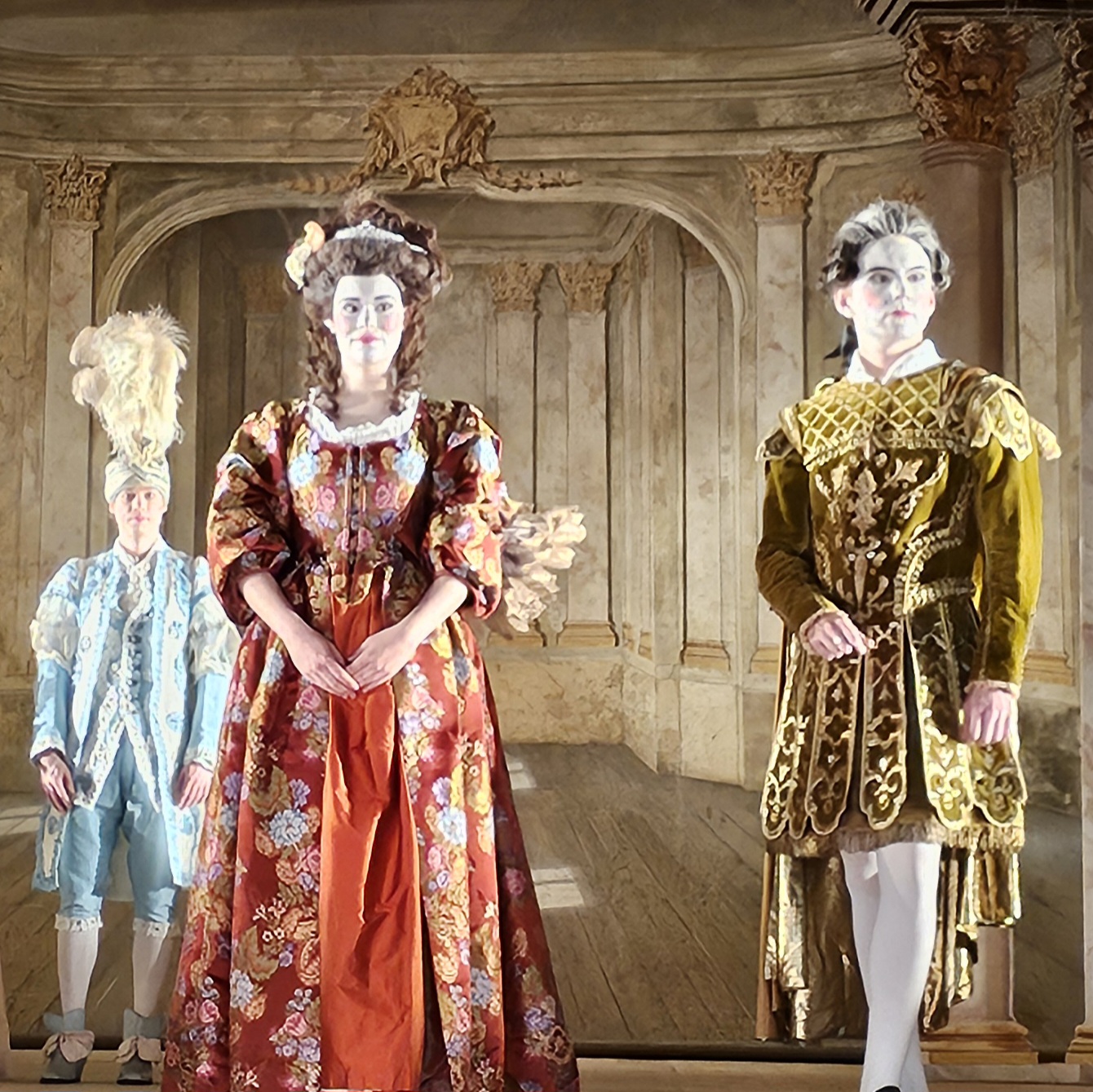
“The curtain disappears. The scene was entirely sea. In the distance was a view of water and rocks so contrived that its naturalness (although feigned) moved the spectators to doubt whether they were in a theatre or on a real seashore. The scene was quite dark except for the light given by a few stars, which disappeared one after another, giving place to Aurora who came to make the prologue. She was dressed entirely in cloth of silver with a shining star on her brow, and appeared inside a very beautiful cloud which sometimes grew large and sometimes small, and oh lovely surprise, circled across the sky on the stage. Meanwhile, the scene grew light as day for the prologue, sung divinely by Signora Maddalena Manelli from Rome, after which one heard a very sweet symphony from the most polished instrumentalists, assisted by the author of the opera with his miraculous theorbo. Then Juno came out on a golden carriage drawn by her peacocks, blazing in a coat of cloth of gold with a superb variety of jewels on her head or in her crown. To the wondering delight of the spectators, the carriage turned from right to left as it pleased her. Mercury appeared before her. This personage was and was not in a machine. He was, since flying, it is impossible not to admit it; he was not, since one saw no other machine but that of a flying body. He appeared adorned in his customary garments with a blue mantle that waved loosely from his shoulders…In a moment one saw the scene change from a seascape to a wood so natural that it carried our eyes to the life to real snowy heights, real flowering countryside, a regal spreading wood and unfeigned melting of water. Andromeda appeared with a following of twelve damsels dressed as nymphs…”

This dramma per musica (Benedetto Ferrari, librettist, and Francesco Manelli, composer) lit a fuse that sparked an explosion in Venice, which led to a love affair that endures even now. It is the point at which public opera started and marks the beginning of its journey to the form we know and love today.